Author: Bhavya Mangla
-

Problem Solving Technique: Step 7- Documentation, Lesson Learned and Promotion (Corrective Action)
—
by
“ Incorrect documentation is often worse than no documentation” — Bertrand Meyer Introduction We all try to work each day from the premise that we are doing our best. However, sometimes, for reasons out of our control, we don’t get the best result. Like we forget to inspect our vehicle for the pollution check or…
-

Problem Solving Technique: Step 6- Horizontal Deployment (Corrective Action)
—
by
“ There is no joy in possession without sharing.” — Erasmus Introduction Referral plays a very important role in our lives. For any marriage function, we prefer to give work to a food caterer who had already provided similar service to our family and friend. When we buy a car and we are satisfied with…
-

Problem Solving Technique: Step 1- Define the Problem
—
by
“A problem well stated is a problem half solved.” – John Dewey Introduction During high school (10th class), the majority of the students are at a crossroads to decide, what subjects they should pick, which they are impassioned and can be their stepping stone for the future. In many schools, the students undergo a psychometric…
-
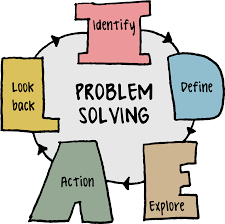
Problem Solving Techniques
—
by
“Maybe you are searching among the branches, for what only appears in the roots” ― Rumi Introduction The easiest way to understand root cause analysis is to think about common problems. If we’re sick and not going to work, we’ll go to a doctor and ask them to find the root cause of our sickness. If…
-
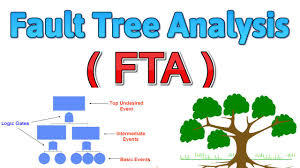
Fault Tree Analysis (FTA)
—
by
“The only people who see the whole picture are the ones who step outside the frame.” ― Salman Rushdie” Introduction At work and in life, problems can crop up. Even if you don’t know how to fix the problem at first, you can think about how the problem happened in the first place. Then you can…